Is it just me or is self-publishing the new Y2K? Everybody is threatening each other, playing up the issue or playing it down, acting like publishing as we know it is terminal.
This is, of course, an over exaggeration but it holds some truth doesn't it?
I wasn't even aware of self publishing until last year when I started looking into getting a Kindle. It intrigued me but not enough to take a chance and buy many self published ebooks. I've read a few (of the best selling kind) and was pretty impressed. Sure there were some minor grammatical issues and the stories weren't as polished as I was used to.
But you know what? Those books were all refreshingly different from what you might find on the bookshelves at Barnes & Noble. I could go on for an entire blog post about the need for college aged YA (I probably will) but the point is I never took traditional publishing vs. self publishing seriously.
Until I read the prosecution and the defense. On her blog Shannon Hale wrote a post entitled "The self-publishing paradox; or, why I love my editor." Jessica Park wrote a piece for the Huffington Post called "How Amazon Saved My Life." Woah. For the first time I was able to see how the issue went far beyond quality. Both ladies have valid points and were very persuasive in their arguments. They are also on different ends of the spectrum, and tend to speak in absolutes that don't reflect the general population.

Hale and Park are very successful in the mode of publishing that they have chosen. They are not the norm. Most writers cannot live off of their earnings and must make ends meet other ways. Despite conceptions authors don't have a lot of control over what is published; from the cover to marketing. Not every book that is traditionally published is popular, innovative or widely read. But there is a trust in the population that these books are worthy of your time and money.
While there may be more "slush" self-published books (not well written, not worthy of your money) nobody can deny that sub-par books get published traditionally every year. BECAUSE IT ALL COMES DOWN TO TASTE.
It's hard to say what the general population will like, what book is going to touch that nerve. And it won't always be something "of substance."
Twilight and 50 Shades of Grey are good examples of this. Both are wildly popular and making their authors exorbitant amounts of money. And yet both books have been accused of being badly written with weak plots. People like what they like despite the quality (reality television comes to mind, I love me some 16 and Pregnant!). Sometimes we like escapism, something that is "bad" for us to break up the monotony.
This is what makes me sad: big publishing houses take on books that they think they are going to sell. Park's break-out Flat Out Love (which I read and really enjoyed) got turned down because it didn't fit nice and pretty in the YA market. But every publisher liked it, thought it was a strong piece of work. They didn't think it would make money but Parks proved them to be very, very wrong.

The elitist image the publishing houses are giving themselves is, I imagine, what is making many people resort to self-publishing. Good and bad more books than ever are finding their way into the world through this method. And getting a bad name because the slush hasn't been weeded out.
I ask you though: don't readers know best what they like? Look at all the best selling self published authors who got turned down for not writing something that fits in the market.
As a young writer all of this makes my head hurt a little. The big dream has always been the traditional route. Write a book, polish it up, get an agent, get a publisher, watch everything fall into place.
I'm honestly concerned though. The book I'm working on now doesn't fit into that neat, little picture of what YA "is". I like breaking the rules and I believe the story is the better for it. Its the kind of story I would want to read and I would like to think that readers will embrace it for its differences. But will agents and publishers see that? Or will they just see a marketing mess that could loose them money?
In conclusion: lets not be snobs about how a book gets into our hands. Judge it as a story not a product. Lets respect our fellow writers. Professional or amateur, successful or still slaving away.
Also in conclusion: I plan on working hard towards traditional publishing. That is my biggest dream. I really, really want it. But it is nice to know that self publishing is there for me if I need it.
What do you think? Would you ever consider self-publishing? Are there any self-published books that you love?
This is, of course, an over exaggeration but it holds some truth doesn't it?
I wasn't even aware of self publishing until last year when I started looking into getting a Kindle. It intrigued me but not enough to take a chance and buy many self published ebooks. I've read a few (of the best selling kind) and was pretty impressed. Sure there were some minor grammatical issues and the stories weren't as polished as I was used to.
But you know what? Those books were all refreshingly different from what you might find on the bookshelves at Barnes & Noble. I could go on for an entire blog post about the need for college aged YA (I probably will) but the point is I never took traditional publishing vs. self publishing seriously.
Until I read the prosecution and the defense. On her blog Shannon Hale wrote a post entitled "The self-publishing paradox; or, why I love my editor." Jessica Park wrote a piece for the Huffington Post called "How Amazon Saved My Life." Woah. For the first time I was able to see how the issue went far beyond quality. Both ladies have valid points and were very persuasive in their arguments. They are also on different ends of the spectrum, and tend to speak in absolutes that don't reflect the general population.

Hale and Park are very successful in the mode of publishing that they have chosen. They are not the norm. Most writers cannot live off of their earnings and must make ends meet other ways. Despite conceptions authors don't have a lot of control over what is published; from the cover to marketing. Not every book that is traditionally published is popular, innovative or widely read. But there is a trust in the population that these books are worthy of your time and money.
While there may be more "slush" self-published books (not well written, not worthy of your money) nobody can deny that sub-par books get published traditionally every year. BECAUSE IT ALL COMES DOWN TO TASTE.
It's hard to say what the general population will like, what book is going to touch that nerve. And it won't always be something "of substance."
Twilight and 50 Shades of Grey are good examples of this. Both are wildly popular and making their authors exorbitant amounts of money. And yet both books have been accused of being badly written with weak plots. People like what they like despite the quality (reality television comes to mind, I love me some 16 and Pregnant!). Sometimes we like escapism, something that is "bad" for us to break up the monotony.
This is what makes me sad: big publishing houses take on books that they think they are going to sell. Park's break-out Flat Out Love (which I read and really enjoyed) got turned down because it didn't fit nice and pretty in the YA market. But every publisher liked it, thought it was a strong piece of work. They didn't think it would make money but Parks proved them to be very, very wrong.
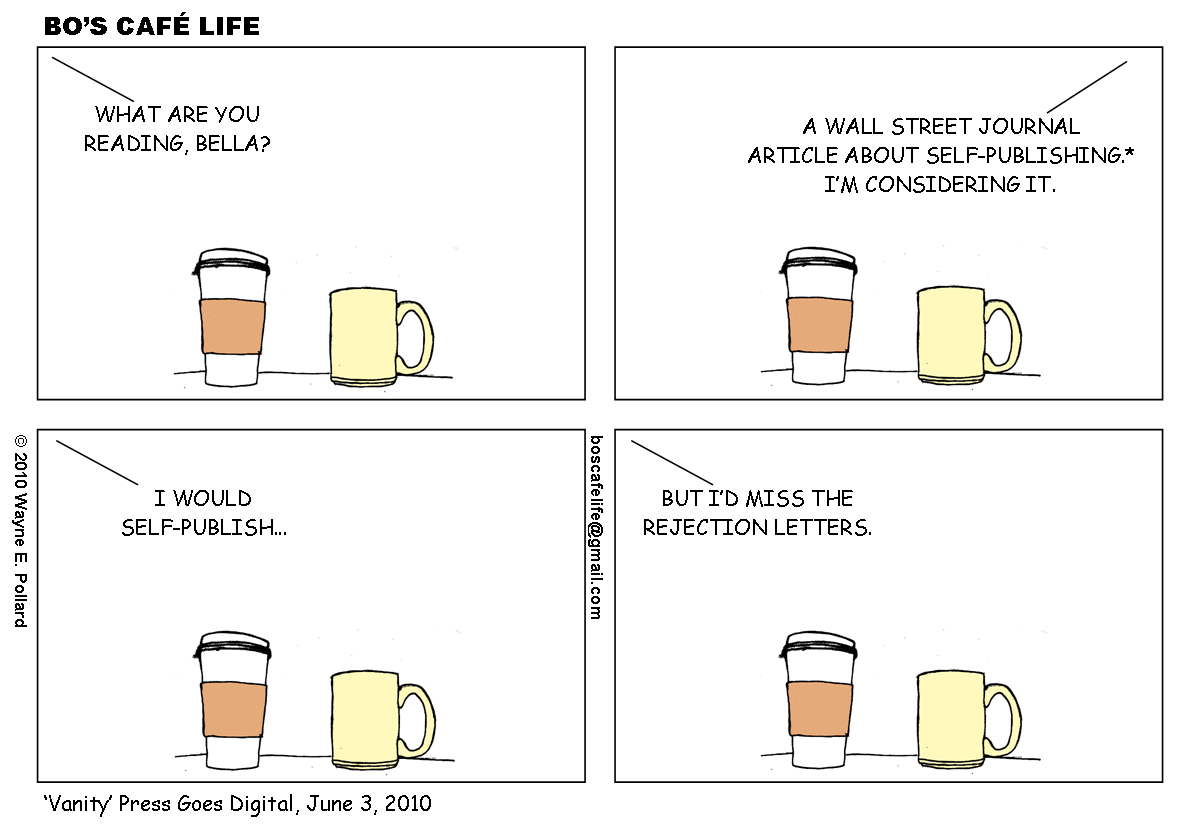
The elitist image the publishing houses are giving themselves is, I imagine, what is making many people resort to self-publishing. Good and bad more books than ever are finding their way into the world through this method. And getting a bad name because the slush hasn't been weeded out.
I ask you though: don't readers know best what they like? Look at all the best selling self published authors who got turned down for not writing something that fits in the market.
As a young writer all of this makes my head hurt a little. The big dream has always been the traditional route. Write a book, polish it up, get an agent, get a publisher, watch everything fall into place.
I'm honestly concerned though. The book I'm working on now doesn't fit into that neat, little picture of what YA "is". I like breaking the rules and I believe the story is the better for it. Its the kind of story I would want to read and I would like to think that readers will embrace it for its differences. But will agents and publishers see that? Or will they just see a marketing mess that could loose them money?
In conclusion: lets not be snobs about how a book gets into our hands. Judge it as a story not a product. Lets respect our fellow writers. Professional or amateur, successful or still slaving away.
Also in conclusion: I plan on working hard towards traditional publishing. That is my biggest dream. I really, really want it. But it is nice to know that self publishing is there for me if I need it.
What do you think? Would you ever consider self-publishing? Are there any self-published books that you love?
